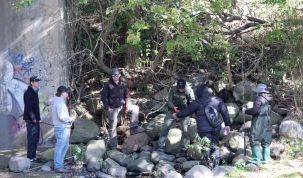

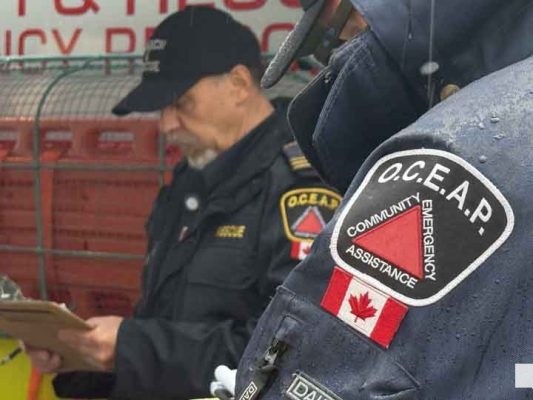
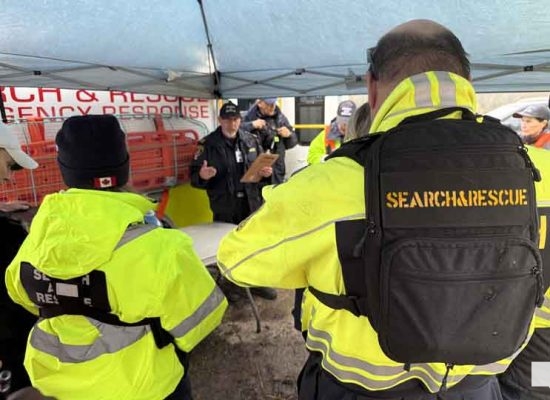
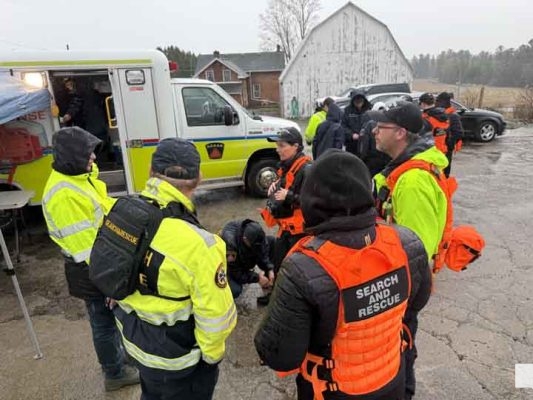
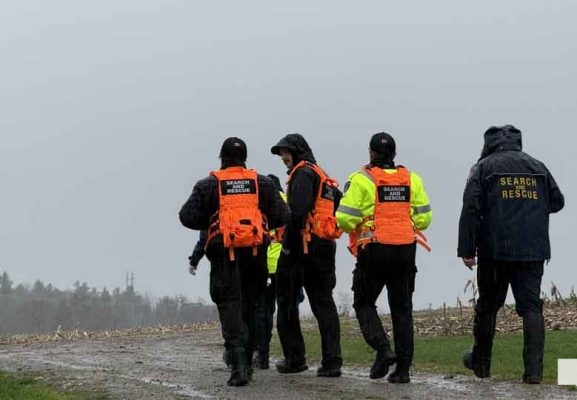

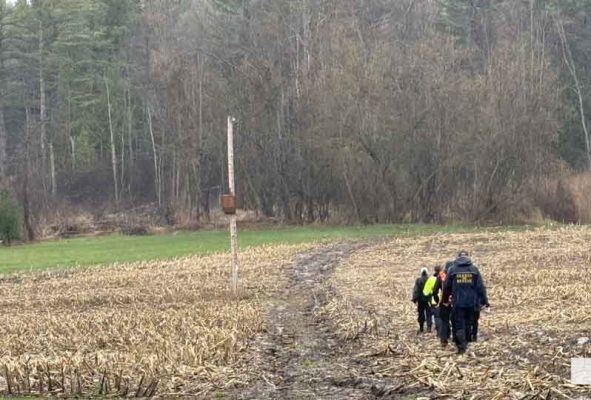
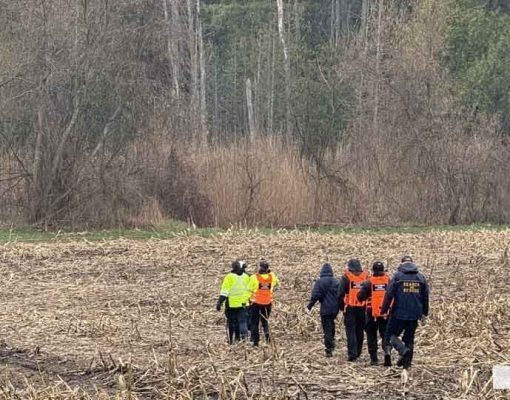
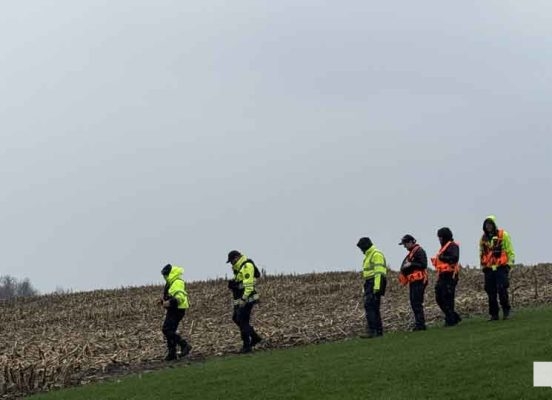
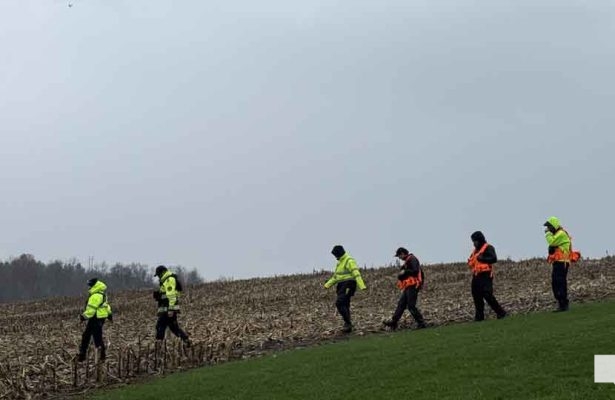
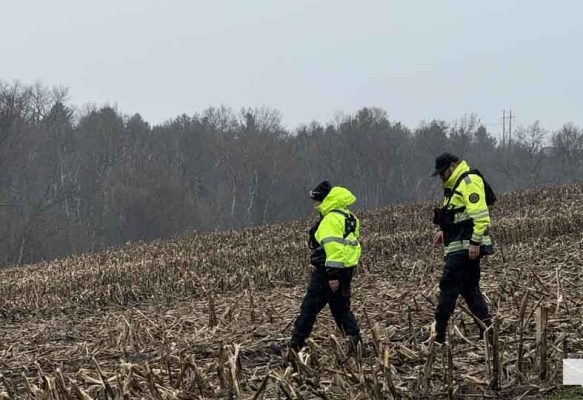
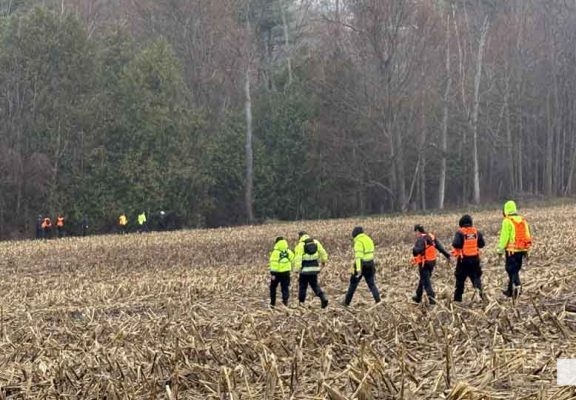
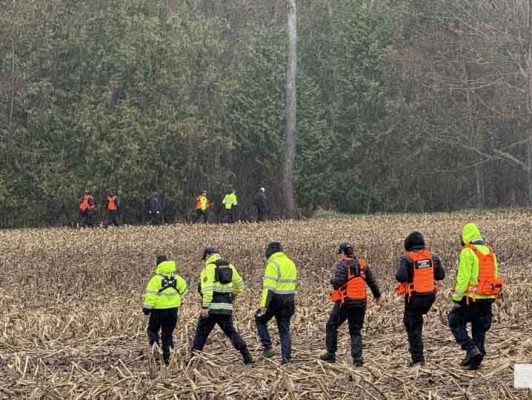
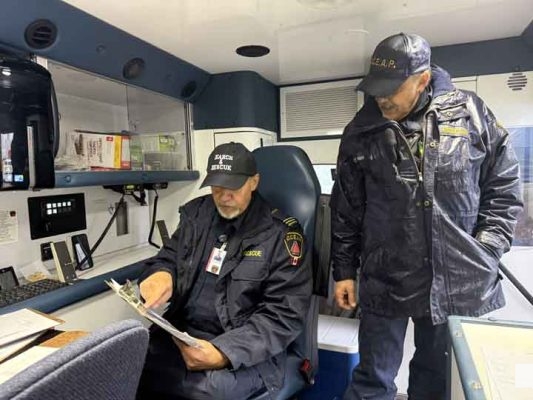
Rain poured steadily over a wooded property off Danforth Road Saturday evening, soaking the ground and reducing visibility—but for volunteers with the Ontario Community Emergency Assistance Program, the difficult conditions were exactly the point.
New recruits gathered for hands-on training designed to simulate the kinds of searches they may one day face when called out by emergency services.
OCEAP, a not-for-profit organization founded in 2006, provides trained ground search and rescue volunteers across Northumberland County. The team is deployed at the request of police, fire, or paramedic services—often in time-sensitive situations involving missing persons, vulnerable individuals, or complex emergency incidents.
Commanding Officer Curtis Kimball said the goal of the exercise was to prepare new members for the realities of search operations—especially the challenges that come with darkness and poor weather.
“It’s a whole different ball game for members to be out searching in the dark versus searching in the day,” said Kimball.
Realistic Training for High-Stakes Situations
One of Saturday’s sessions focused on a common but urgent scenario: a missing elderly person with a medical condition who requires medication. In real situations, those factors significantly increase the risk level and urgency of a search.
Volunteers were introduced to fundamental search techniques, including:
Grid and line searches
Maintaining spacing and visual contact with team members
Radio communication protocols
Scene safety and situational awareness
Training also emphasized discipline and consistency—key factors in ensuring no area is missed during a search.
Operating in heavy rain added another layer of realism.
“People tend to not go missing on sunny days,” Kimball said. “This is the kind of weather where someone could succumb to hypothermia very quickly. It’s important for our members to understand how serious that can be.”
Who They Search For
Search and rescue teams like OCEAP are often called when vulnerable individuals go missing, including:
Seniors with dementia or Alzheimer’s
Children who wander away from home
Individuals experiencing mental health crises
Hikers or outdoor enthusiasts who become lost
In many of these cases, time is critical. Survival rates can drop significantly depending on weather, terrain, and the individual’s condition.
That urgency is reflected in how OCEAP trains—preparing volunteers to respond quickly, work methodically, and operate safely in unpredictable environments.
More Than Search and Rescue
While ground searches are a primary role, OCEAP members are also trained to assist during broader emergencies.
That includes supporting evacuation centres, helping coordinate logistics, and providing assistance to displaced residents.
Kimball pointed to the response following a fatal fire in Colborne, where approximately 20 people were left homeless. OCEAP volunteers were on hand at the Keeler Centre to support evacuees as they arrived.
“Our members were there to be a friendly face,” he said. “Sometimes people just need someone to listen to them in those moments.”
A Team Built on Community
OCEAP’s strength comes from its volunteers—people from all walks of life who share a commitment to helping others. Members include students, retirees, healthcare workers, first responders, and skilled tradespeople.
No prior search and rescue experience is required to join. Recruits receive training in:
Search techniques and navigation
First aid and basic survival awareness
Communication systems
Incident command structure
Volunteers are also expected to maintain a reasonable level of physical fitness, as searches can involve long hours over rough terrain in all types of weather.
Growing the Team
Currently, OCEAP has approximately 40 active members and is looking to expand to 50 by the end of 2026.
Kimball said recruitment is ongoing, with a focus on people who are dependable, community-minded, and willing to commit time to training and call-outs.
“We really get a lot of dedicated people,” he said. “They see this as something where they can make a difference.”
Training for the Moments That Matter
As Saturday’s exercise wrapped up, volunteers packed up their rain-soaked gear—tired, but better prepared.
For many, the conditions served as a reminder of why the training matters.
While most people spent the evening indoors, these volunteers chose to be outside—learning, practicing, and preparing for the day when a call comes in and someone, somewhere, needs to be found.

Author: Pete Fisher
Has been a photojournalist for over 30-years and have been honoured to win numerous awards for photography and writing over the years. Best selling author for the book Highway of Heroes - True Patriot Love