
Generally speaking, policies are created to improve how things are done. As time passes, new policies are introduced to address changing circumstances. While change is not always welcomed, it is often necessary.
But sometimes a policy creates more problems than it solves.
During an incident earlier this week, a policy implemented by the Town of Cobourg did little to help anyone. In fact, it hindered the flow of important public information during a significant emergency on Highway 401.
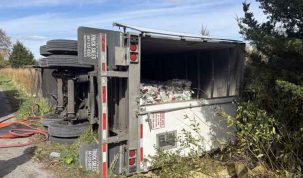
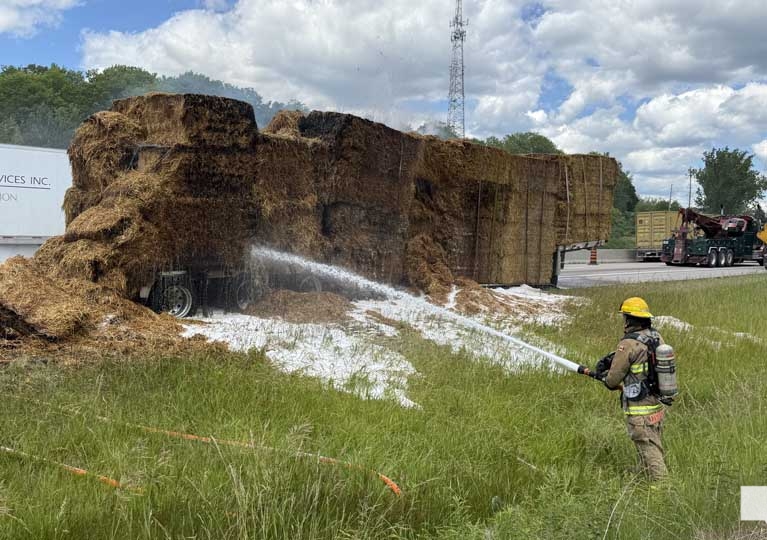
On Monday, June 22, 2026, the Cobourg Fire Department and Hamilton Township Fire Department responded to a flatbed trailer fire in the eastbound lanes of Highway 401 near the Grafton exit.
When firefighters arrived, the rear of the trailer, loaded with hay, was fully engulfed in flames.
Initially, one lane of traffic remained open, but as crews battled the stubborn blaze, all eastbound lanes were eventually closed at the Division Street/County Road 45 overpass in Cobourg.
The closure was absolutely the right decision. The safety of firefighters working on the highway must always come first.
Approximately eight hours later, Highway 401 reopened.
During those eight hours, traffic backed up well beyond Cobourg. Congestion spread onto local roads throughout Cobourg, Hamilton Township, and surrounding areas as motorists searched for alternate routes.
Hay fires are notoriously difficult to extinguish. Thankfully they are rare, but when they do occur they can burn for hours. They can be caused by several factors, including overheated brakes, exhaust systems, or even a discarded cigarette.
Incidents like this are exactly when the public benefits from timely, accurate information—not only about traffic delays, but also about why the highway remains closed and what firefighters are dealing with.
Unfortunately, because of a communications policy established by the Town of Cobourg, Today’s Northumberland was unable to provide that information.
At the scene, Today’s Northumberland requested interviews with both the firefighter in charge and the Acting Fire Chief. Both politely declined. It was evident they were uncomfortable, but under the current policy they were not permitted to discuss the fire suppression efforts, the challenges firefighters faced, or why the closure would likely continue for several hours.
When questioned afterward, Town CAO Tracey Vaughan said, “We remain committed to transparency and to providing accurate information within the scope of our authority.”
She also stated that because the Ontario Provincial Police were the lead agency, it was essential that all communications come from the authority responsible for the scene.
That position is unfortunate.
The OPP was responsible for traffic control and the overall incident management. However, the Cobourg Fire Department was responsible for extinguishing the fire. Firefighters—not police officers—were in the best position to explain the challenges of fighting a hay fire and why the highway could not safely reopen.
This is not a criticism of the OPP. They have their role, just as firefighters have theirs.
To our knowledge, no other municipality or township in Northumberland County has adopted a policy that prevents fire officials from discussing fire suppression during active incidents. Fire chiefs and incident commanders throughout the county have routinely spoken with media at Highway 401 incidents and other emergencies for years. Those conversations educate the public while never interfering with emergency operations.
This was a first.
Despite attempts to discuss the issue with the Town of Cobourg, it appears the decision has already been made.
If municipal officials were aware that the closure would last for several hours and that thousands of vehicles would be diverted through Cobourg, they could also have issued updates advising residents to expect unusually heavy traffic throughout town.
Today’s Northumberland has always believed that communication is one of the most important tools available during emergencies. Good communication educates the public, reduces speculation, and helps people make informed decisions.
Instead, the gaps were filled by media reports, eyewitness accounts, and social media.
The previous system wasn’t broken. Fire officials spoke openly about their work, the public was informed, and emergency responders continued to do their jobs effectively.
It’s difficult to understand why something that worked so well needed to be fixed.

Author: Pete Fisher
Has been a photojournalist for over 30-years and have been honoured to win numerous awards for photography and writing over the years. Best selling author for the book Highway of Heroes - True Patriot Love