

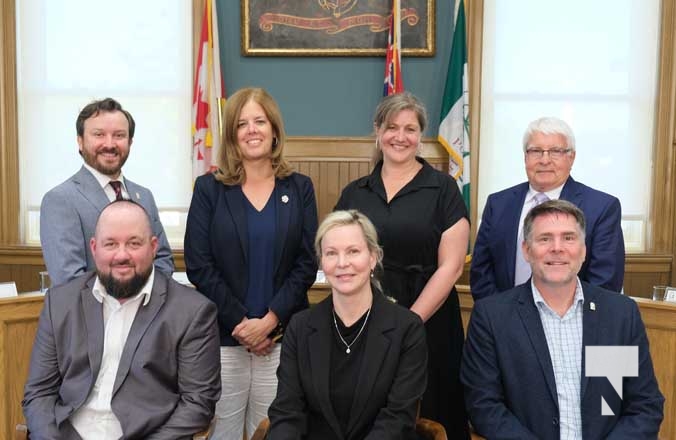

Port Hope Mayor Olena Hankivsky has chosen to take a collaborative approach to preparing the 2026 municipal budget.
That was noted at Tuesday night’s committee-of-the-whole meeting during a presentation by Director of Finance and Treasurer David Baxter, who referenced an October mayoral directive regarding budget.
First Baxter had reminded council of the budget process for municipalities which have Strong Mayor Powers from the province. The mayor must provide a proposed budget to council, the clerk and the public by Feb. 1 each year and if not provided by that date the process defaults to a council-led budget.
Council may propose amendments and the mayor may issue a decision directing staff to prepare the budget. Council doesn’t approve the municipal budget. It is deemed adopted after the amendments and veto processes have been completed. Council still passes tax rations, fees and levy bylaws.
After the mayor introduces the budget, there are 30 days for council amendments, 10 days for a mayoral veto after such amendments, 15 days after notification of veto for a ⅔ council support override.
Baxter noted Mayor Hankivsky has chosen to keep the budget process as consistent to previous years as possible, despite the new Strong Mayor legislation put in place earlier this year.
He pointed to key points from the directive, specifically “whereas it is the practice of the Municipality of Port Hope for municipal staff to prepare the draft budget for Council’s review and consideration; and whereas it is not the Mayor’s intent to exercise her power with respect to directly proposing and adopting the budget for the 2026 fiscal year.”
Mayor Hankivsky directed staff to prepare the proposed 2026 Capital and Operating Budget for Council’s consideration and bring the budget forward to council in accordance with the established municipal budget process and timelines.
“I just want there to be an awareness that this isn’t the mayor issuing a directive to enforce this,” Baxter said. “This is the exact opposite. This is the mayor issuing a directive to try and maintain what we have always done to the extent that we can while still respecting and abiding by the legislation.”
Baxter noted that the budget will ultimately still have to be proposed by the mayor to keep in line with legislation. Prior to that, under this approach by the municipality, staff will present the budget and council members will recommend amendments to the mayor through motions.
“So when we go through the process this year, you won’t be directing staff to make a change to the budget,” Baxter said. “Council will be identifying motions that are recommendations to the mayor.”
Baxter said it maintains a familiar approach with collaboration and in an open forum and for any desired amendments to the initial budget coming forward to be identified up front.
“If we weren’t doing this, a mayor’s budget would be proposed and then anything after that would have to be formal amendments to be voted on after the fact…so we’re anticipating going through this and trying to maintain as much as we can of our regular process, that we will actually see fewer amendments and you will have had the opportunity to provide input earlier on in the process,” he said.
Baxter also provided a Budget Timeline:
Jan. 13 special meeting: Staff Proposed Budget – presentation
Jan. 15 special meeting: Staff Proposed Budget – review of proposed recommendations by council
Jan. 20: Mayor’s Proposed Budget – published on website
Jan. 28: Council Proposed Amendments Submissions Period – for including in Feb. 3 COW Agenda posted on Jan. 29
ONLY IF REQUIRED
Feb. 3 special meeting: Mayor’s Proposed Budget – vote on council proposed amendments
Feb. 6: Mayor’s Veto Period
Feb. 11: Council Override Request Period – for including in Feb. 17 council agenda posted on Feb.12
Feb. 17: Mayor’s Proposed Budget – vote on council overrides
Baxter said in order for that timeline to be achieved, there need to be three adjustments made to specific time periods in the budget cycle. Two involve council and one is for the mayor.
The recommended motions called for the up to 30 days for the Council Amendment Period to be reduced to 14 and the maximum 15 days for a Council Veto-Override Period to be reduced to 11 days.
Baxter said Hankivsky agreed to reduce the Mayor Veto Period from a maximum of 10 days to three.
“Thank you for laying that out so very clearly to us Director Baxter,” Mayor Hankivsky said before turning to council members for questions and comments. There were none.
“There you have it. That’s how clear it was,” the mayor added.
The motions passed unanimously.

Author: Pete Fisher
Has been a photojournalist for over 30-years and have been honoured to win numerous awards for photography and writing over the years. Best selling author for the book Highway of Heroes - True Patriot Love