
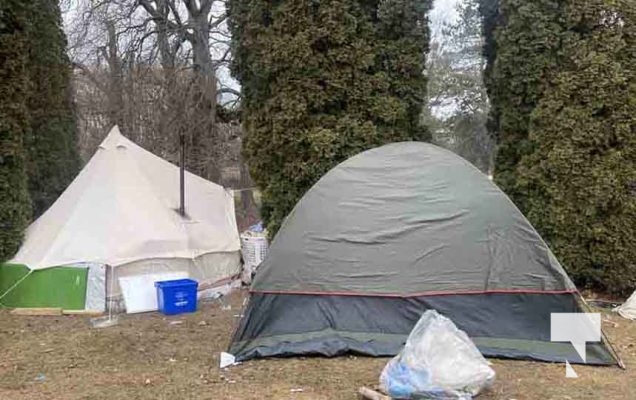
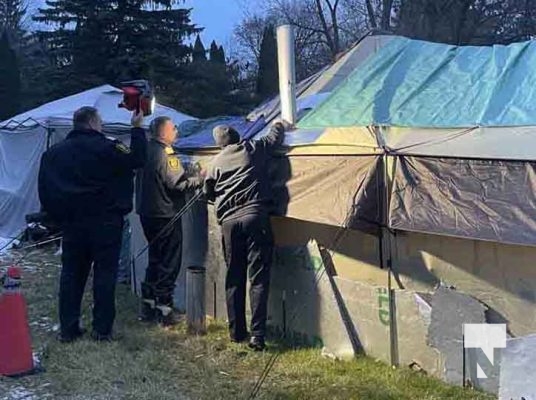
The Office of the Fire Marshal of Ontario said they have no authority to impose restrictions on the use of tents that have been altered for use at encampments.
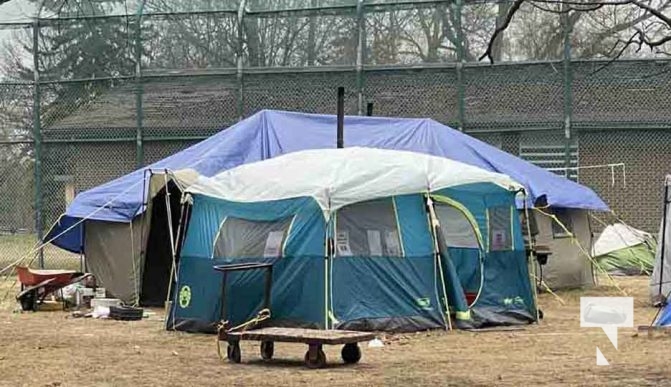
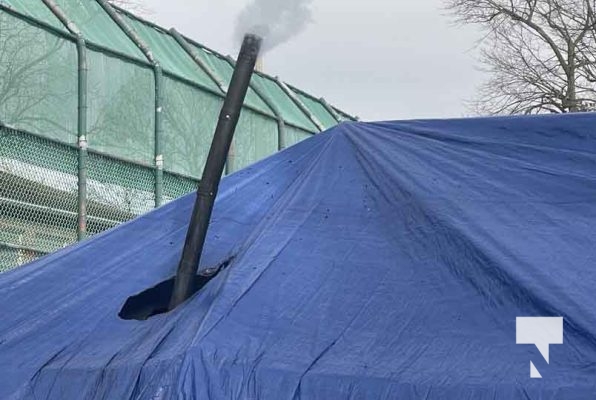
Several tents using wood stoves have a canvas material – but on a number of the tents a plastic sheet has been placed over the tent hypothetically to help with insulation and keeping the heat inside.
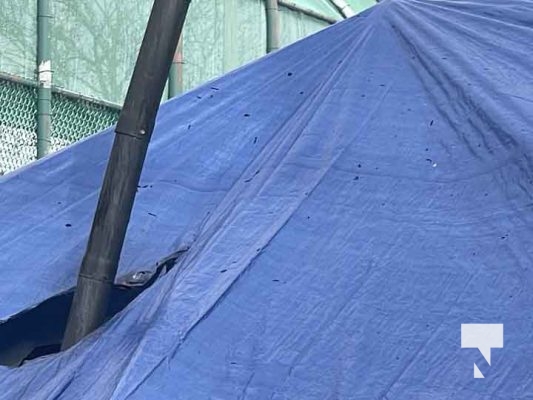
But Today’s Northumberland reached out to the Office of the Fire Marshal wondering if the alteration of the use intended for the tent would constitute a fire hazard. Several tents at the encampment have plastic tarps over them that have been burned/melted from heat and sparks from the chimney
“The Office of the Fire Marshal (OFM) has no authority to impose restrictions on the use of tents, but strongly recommends that fuel-powered heat sources, such as a stove, should only be used inside a tent with extreme caution, following manufacturers’ safety guidelines,” said OFM spokesperson Sean Driscoll.
Flammability performance requirements for tents are governed by federal law through the Tents Regulations under the Canada Consumer Product Safety Act.
Under the Tents Regulations, manufacturers wishing to sell a tent must perform a flame test to the Industrial Fabrics Association International Standard CPAI-84.
“Carbon monoxide (CO) is a by-product of incomplete combustion of fuel such as natural gas, propane, heating oil, kerosene, coal, charcoal, gasoline, wood, or other bio-fuels. Fuel-burning devices capable of producing CO include space heaters, wood stoves, and gas/charcoal barbeques.
“Improper ventilation of a fuel-burning device in an enclosed space, like a tent, could lead to unsafe levels of CO building up, which can poison the body quickly in high concentrations, or slowly over long periods of time, explained Driscoll.
Because CO is an ordourless and colourless gas, only a working carbon monoxide alarm can detect it. Under Ontario law, residential buildings are required to have a CO alarm installed, including:
Houses (detached, semi-detached, attached)
Rental Apartments/Condominiums
Residential Group Homes (adults, youth, children)
Hostels/Domiciliary Hostels
Social Housing
Student Residences/Dormitories
Retirement Homes (classified as residential occupancies)
Camps for Housing Workers
Boarding, Lodging, Rooming and Halfway Houses
Convents/Monasteries
Clubs (residential)
Hotels/Motels
Open and semi-secure detention for Youth
Recreational Camps
Residential Schools
Shelters (homeless/women)

Author: Pete Fisher
Has been a photojournalist for over 30-years and have been honoured to win numerous awards for photography and writing over the years. Best selling author for the book Highway of Heroes - True Patriot Love