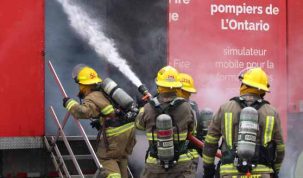


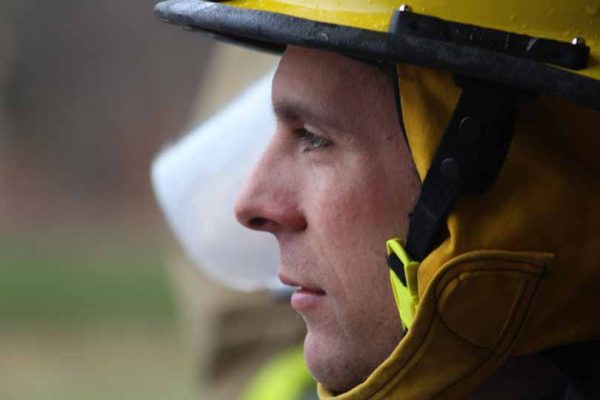
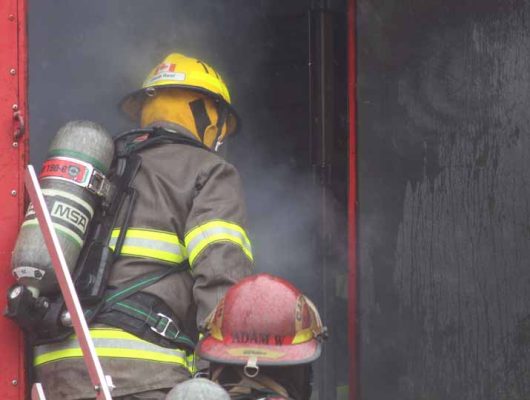

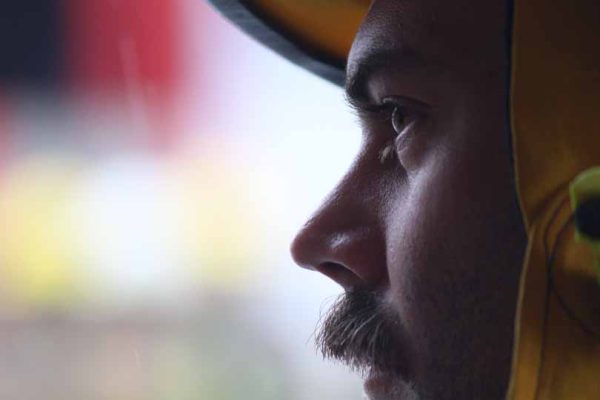


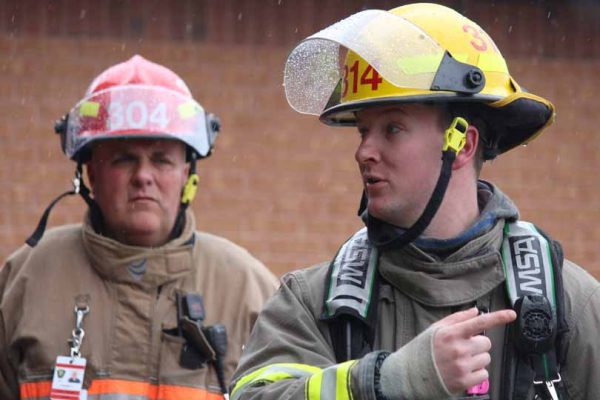

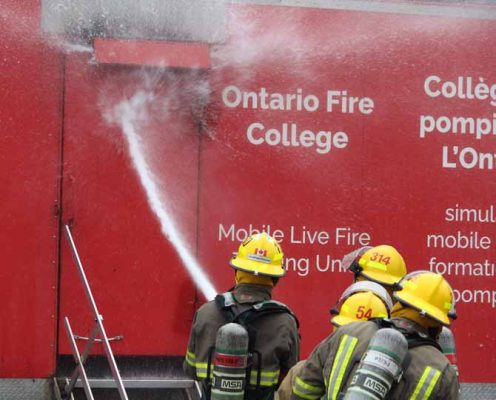
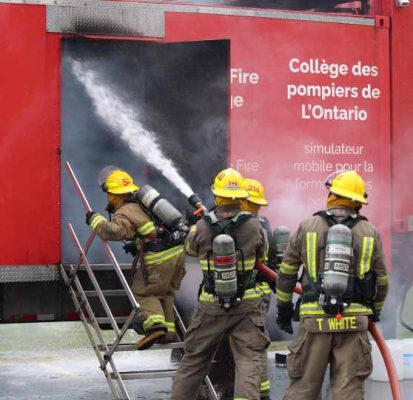
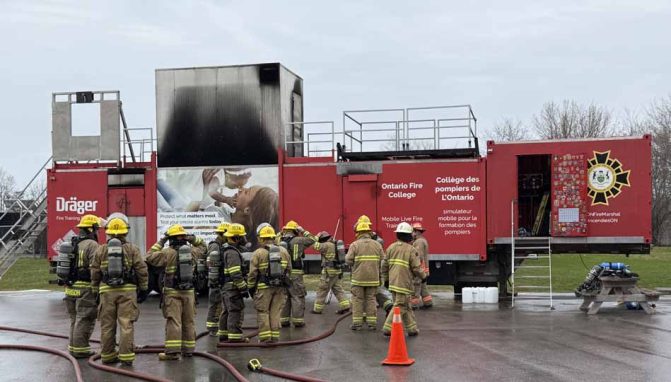


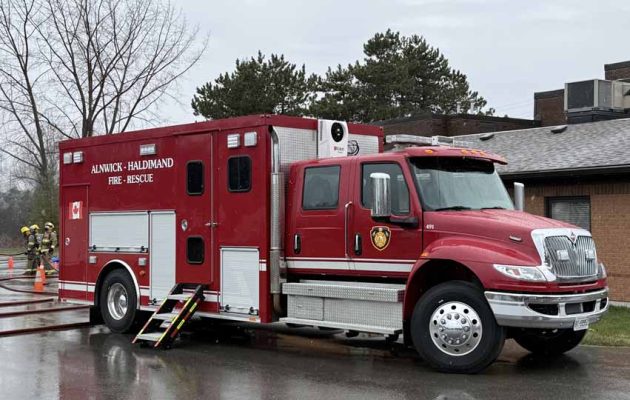
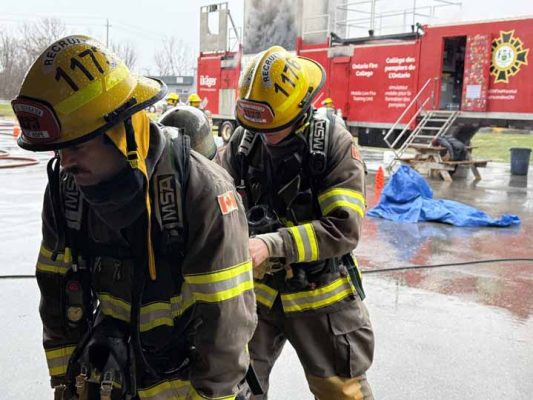
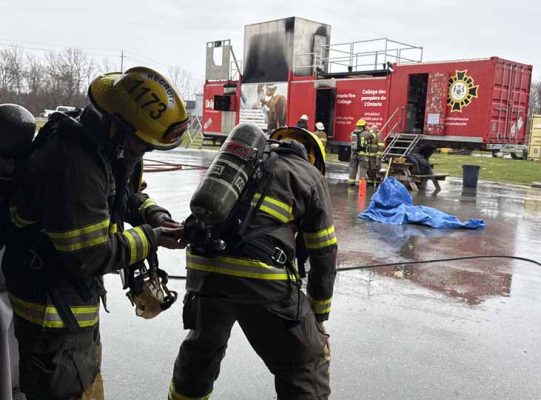
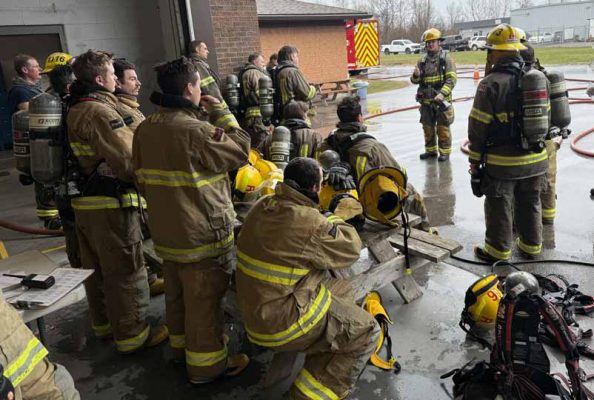

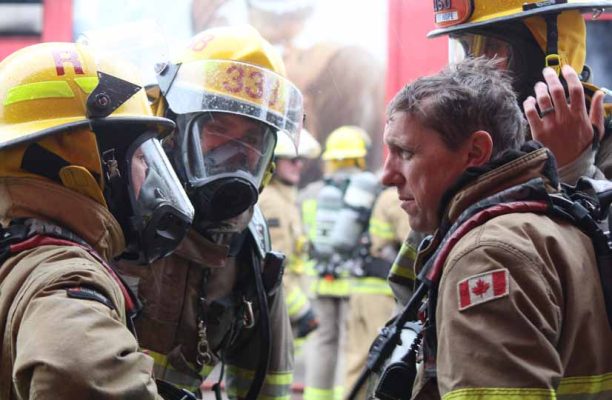
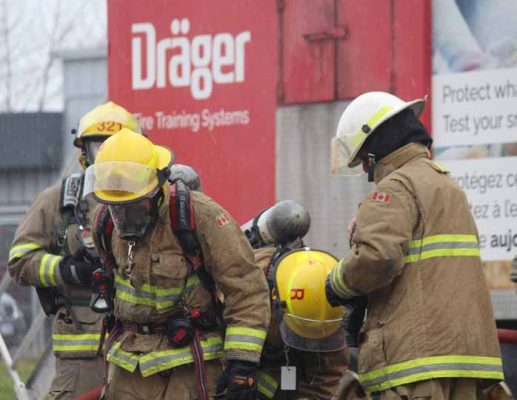
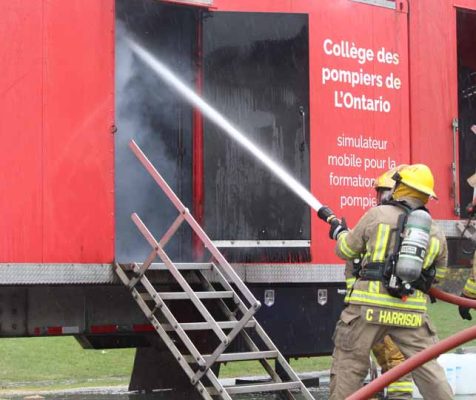

A specialized Mobile Live Fire Training Unit transformed the back of Cobourg Firehall into a hub of hands-on learning this past week, giving firefighters from across Northumberland County the opportunity to train in realistic emergency scenarios close to home.
The week-long session wrapped up on Sunday, April 12, 2026, with approximately 25 firefighter recruits taking part in a full day of intensive exercises inside the state-of-the-art trailer.
The province currently operates two 16-metre Mobile Live Fire Training Units, with two more in development. The mobile units are designed to bring live fire training directly to communities, replacing the need for firefighters to travel to the Ontario Fire College in Gravenhurst — a shift that is saving municipalities both time and money.
Alnwick/Haldimand Deputy Fire Chief Allan Sheppard said the technology used in the trailer marks a significant evolution in firefighter training.
“This system uses simulated smoke and propane, which is vastly different from the training methods used decades ago.”
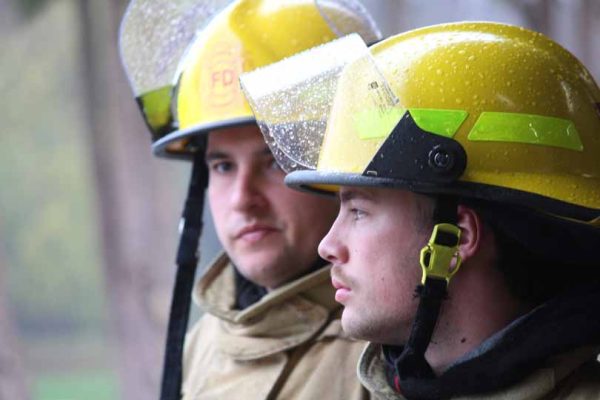
Throughout the week, departments from Cobourg, Port Hope, Alnwick/Haldimand Township, and Hamilton Township rotated through a variety of controlled scenarios.
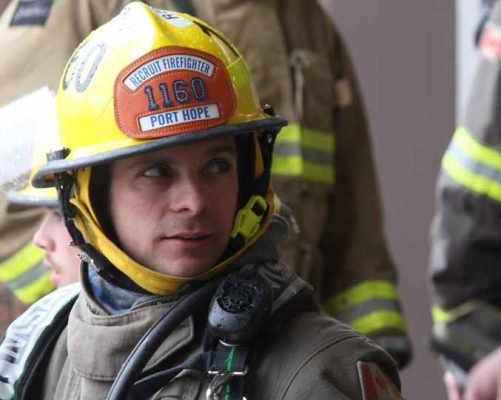
On Sunday the training was for the recruits from the various departments.
Wearing self-contained breathing apparatus (SCBA), they navigated confined spaces, changing conditions, and simulated fire environments under the supervision of experienced instructors.
For many of the participants — particularly part-time firefighters — having the training delivered locally made a meaningful difference.
“It makes it a lot easier because everybody’s got a job and families,” Sheppard said.
The joint training sessions also offered an added benefit: building familiarity and teamwork among neighbouring departments that may be called upon to respond together during real emergencies.
“It makes it a lot safer for everybody because you have an idea what they’ve been through, because you’ve been through the same training,” he added.
Constructed entirely of steel, the trailer is built to withstand repeated high-heat scenarios. Its interior features moveable walls, allowing instructors to reconfigure the space and create a wide range of emergency situations.
Sheppard said the flexibility and realism of the unit make it a major improvement over past training approaches.
“It’s a really nice system — a lot better than what they had 15 or 20 years ago.”
With more mobile units planned for the future, firefighters across Ontario can expect greater access to this kind of advanced, community-based training — helping ensure they are prepared when real emergencies strike.
Quick Facts
• There are 441 fire departments in Ontario including 32 large municipal services consisting of full-time fire personnel, 215 composite fire departments made up of full-time and volunteer personnel, and 194 small municipal fire services or communities without municipal organization and are made up solely of volunteers.
• Municipal fire departments work closely with the Office of the Fire Marshal to deliver educational and training programs for firefighters.
• The Mobile Live Fire Training Units were manufactured in Ontario by Dräger Safety Canada. Dräger is an international leader in medical and safety technology with over 130 years of experience.
• The National Fire Protection Association is an internationally recognized organization that develops fire service training standards used in Ontario.

Author: Pete Fisher
Has been a photojournalist for over 30-years and have been honoured to win numerous awards for photography and writing over the years. Best selling author for the book Highway of Heroes - True Patriot Love