
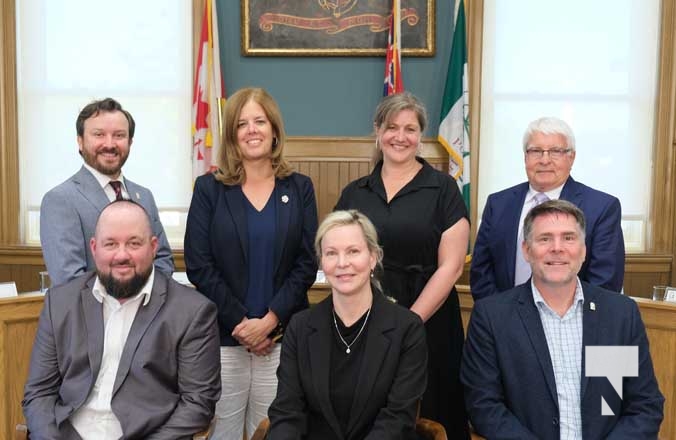

Port Hope council has voted to move forward with an Environmental Assessment for the Garden Hill Dam before a decision for repair or decommissioning is made.
At a special meeting Tuesday, council approved funding of $50,000 per year in 2026 and 2027 — totaling $100,000 from the Community Benefit Reserve Fund — to support the EA, contingent on a successful application to the province’s Water and Erosion Control Infrastructure (WECI) program.
Council heard concerns from the community in addition to a presentation from Ganaraska Region Conservation Authority (GRCA) and Northumberland County representatives.
Kevin Killin, speaking on behalf of the Garden Hill Neighbourhood Group, urged council to bypass the EA and proceed directly with repairs. He noted the current dam has been in place since 1959, with dams at the site dating back to 1861.
“Repair is going to preserve a historic asset and decommissioning it will permanently erase a functioning ecosystem,” Killin told council.
Citing figures from a recent report, Killin said estimated municipal contributions for repair ($337,000) and decommissioning ($325,000) were similar if an EA was not included in the repair plan. He argued the reservoir currently supports a thriving ecosystem, serving as nesting habitat for geese, swans, ducks, turtles and fish, and as a migration route for many species.
“If we don’t fund this repair and we start the assessment today, we aren’t saving $340,000 — we’re not saving anything,” he said. “We’re instead accepting the risk of a multi-million dollar liability, the loss of our village’s fire protection and an environmental disaster that can’t be undone.”
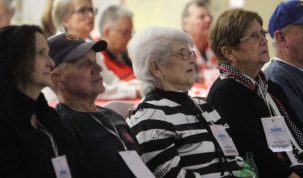
His remarks drew applause from members of the gallery, prompting Mayor Olena Hankivsky to remind attendees that clapping is prohibited under updated council bylaws.
Councillor Les Andrews acknowledged Killin’s presentation but said council members felt broader consultation was needed.
“You presented a very good case, but all the questions you’re asking may have to be answered in an EA,” Andrews said, adding that Northumberland County, the Ganaraska Region Conservation Authority (GRCA) and First Nations should be involved in discussions.
Cory Harris, watershed services coordinator with the GRCA, explained that ownership of the infrastructure is split: the roadway, embankment and culvert are managed by Northumberland County, while the reservoir and dam outlet structure are managed by the GRCA.
“The two structures are connected, which makes this an interesting asset to manage,” Harris said.
He noted the reservoir is a key water source for the Port Hope Fire Department. However, deterioration of the dam’s stoplogs has accelerated in the past two years. Originally estimated at just over $100,000 to replace, recent quotes have exceeded $300,000 due to rising material and staging costs.
Replacing the stoplogs would require drawing down the entire reservoir — a complex process involving temporary works, pumping and measures to protect aquatic species and manage sediment.
Initial estimates presented to council showed shared repair costs ranging between $625,000 and $750,000 over two years, while decommissioning costs were estimated between $525,000 and $650,000.
Harris outlined the initial cost estimates for dam repairs. Year 1 (2026) would have a dam safety review, review of dam structure and culvert, geotechnical investigation and a detailed design of engineering solutions at a cost of $37,500 to the Municipality of Port Hope and in Year 2 (2027) which would have construction and implementation of design solutions for the dam, staging efforts including a temporary coffer dam, pumping/maintaining stream flows around work area, etc at an ask of $300,000 from council.
The total shared cost is between $125,000-$150,000 for year one and $500,000-$600,000 for year two.
The initial cost estimates for decommissioning were also shown.
Year 1 (2026) included the completion of a Class EA for decommissioning of the dam, exploring various decommissioning options, public input and engagement, selection of a preferred alternative and a design/alternative of preferred alternative that would require $75,000 from Port Hope.
Year 2 (2027) included construction work to decommission the dam, stabilization of creek and valley, construction of offline ponds to maintain water for dry hydrant, staging efforts including temporary coffer dam, pumping/maintaining stream flows around work area, etc at a cost of $250,000 to Port Hope.
The total shared cost is between $125,000-$150,000 for year one and $400,000-$500,000 for year two.
Mayor Hankivsky wondered what percentage of WECI applications are successful given the amount of dams in the province and if demand exceeds funding available.
Harris said the dam would likely rank as high-risk under WECI’s scoring system, potentially improving funding chances, though he could not provide application success rates.
Councillor Darrell Toms, who represents the Ward 2 rural area, asked Director of Protective Services/Fire Chief Jason Williams if there are any safety concerns in the community if the dry hydrant is no longer functional.
Williams warned that losing access to the Garden Hill pond would negatively impact fire suppression in that area.
“It’s our main source of water for that area of the Municipality of Port Hope,” Williams said, noting alternative sources would likely require agreements with private landowners and new infrastructure investments.
CAO Mike Melinshyn shared a portion of a letter from Scugog First Nation about concerns related to impacts to the Ganaraska River and impacts to rights-based reconciliation with First Nations.
“They are requesting engagement with the municipality and GRCA on wholesome rights-based consultation on the future of the dam to acknowledge some of these stressers.”
Mayor Hankivsky questioned why Indigenous perspectives were not included in the original presentations.
“We’re in the phase of trying to secure funding to begin a project, but certainly if we are successful in getting some funding support and getting a successful WECI application through we would be engaging not only the community, but Indigenous partners in the EA process,” Harris said.
Ward 2 Councillor Vicki Mink delivered an extensive statement, noting she understands the concerns of residents but also finds herself in a vulnerable position as a GRCA board member.
“I have served for almost eight years and I take the role seriously, objectively, not emotionally,” she said.
“I have a deep respect for GRCA staff, their expertise, their professionalism and their recommendations. The fact that this situation is occurring in my municipality doesn’t exempt me from that obligation. It does not permit me to react emotionally or fearfully with an election in sight.
Mink also stressed the importance of Indigenous involvement in the process.
“Our land acknowledgement states that we honour First Peoples as rights-holders and stewards of lands and waters that we rely on. We commit to learning from Indigenous ways of knowing and working toward a shared future based on Truth and Reconciliation,” she said. “These are not symbolic worlds, they are supposed to guide our decisions. I said at the last meeting that Indigenous knowledge and guidance must be a priority. If we are not prepared to uphold those values of our land acknowledgment then to be honest we should not be reciting it at all.”
Mink argued that because collaborative engagement had not yet occurred with all relevant stakeholders, proceeding with an EA was “the only responsible option.”
“The EA process is not a decision in itself,” she added. “It is the tool that gives the information, transparency and the consultation that is necessary to make a defensible and respectful decision that may or may not change the landscape of Garden Hill. It brings science, community voices, Indigenous knowledge and fiscal responsibility together in one.”
Council ultimately approved Option 3 in the staff report — proceeding with a Class Environmental Assessment — in a recorded vote requested by Mink.
Voting in favour were Councillors Andrews, Todd Attridge, Claire Holloway Wadhwani, Mink, Deputy Mayor Adam Pearson and Mayor Hankivsky. Councillor Toms opposed the motion.

Author: Pete Fisher
Has been a photojournalist for over 30-years and have been honoured to win numerous awards for photography and writing over the years. Best selling author for the book Highway of Heroes - True Patriot Love