
A critical moment is fast approaching for the Cobourg Police Services Board—Sunday, March 22, 2026.
That date marks 30 days since the Ontario Human Rights Tribunal (HRTO) ruled in favour of Amy Arthur, a former auxiliary officer trainee with the Cobourg Police Service. What should have been a straightforward matter of accountability has instead become yet another example of delayed communication, unanswered questions, and a troubling lack of transparency.
Arthur’s case dates back to 2019, when she had been training for less than two months as an auxiliary officer. Represented by Roberto Henriquez, she brought forward a complaint against the Cobourg Police Services Board, which was represented by Glenn Christie and Zohra Bhimani. On February 20, 2026, HRTO Vice-Chair Denise Ghanam ruled in Arthur’s favour, awarding her $20,000 in damages for injury to dignity, feelings, and self-respect.
The ruling was clear. Payment was to be made within 30 days.
That deadline now looms.
Yet instead of clarity and accountability, the response from those entrusted with oversight has been slow, fragmented, and, at times, silent.
Arthur has stated that she still has not received payment as of Friday.
The timing of this deadline is hard to ignore. As some senior members of the Cobourg Police Service prepare to take part in the annual Polar Plunge into the frigid waters of Lake Ontario, the real test facing leadership is not symbolic—it is substantive. It is about whether those in positions of authority are willing to demonstrate accountability when it matters most.
Trust and transparency are not optional in public institutions. They are foundational. And in Cobourg, both appear to be slipping.
For years, Today’s Northumberland has documented incidents involving the Cobourg Police Service that were not disclosed to the public in a timely—or in some cases, any—manner. This pattern has contributed to a growing perception that information is being selectively released, rather than openly shared.
The handling of the HRTO decision only deepens that concern.
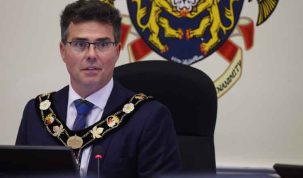
On February 25, 2026—five days after the ruling—Today’s Northumberland reached out to Police Services Board Chair Adam Bureau seeking comment. Two days later, Bureau responded via email, stating that the Board had not received any official report or decision pertaining to the case.
That statement raises immediate and serious questions.
The HRTO decision was issued on February 20. It was provided directly to the complainant and, by all reasonable expectations, would have been available to the responding party at or near the same time. Decisions of this nature are also typically published online shortly after release.
So how is it that nearly a week later, the Chair of the Police Services Board claimed not to have received it?
Was there a breakdown in communication? If so, where? And why has there been no explanation?
It was not until March 17—nearly a full month after the ruling—that the Board issued a public statement. In that statement, the Board indicated it was “reviewing the ruling carefully, including the possibility of appeal.”
That response, while acknowledging the decision, offers little in the way of transparency. It does not address the timeline. It does not clarify when the Board actually received the decision. It does not provide any information on potential financial implications for taxpayers.
And when follow-up questions were asked—including when the decision was received and how much the legal proceedings have cost the public—there was, once again, silence.
This silence is not a neutral act. It erodes public confidence.
Adding to the concern is the absence of comment from other members of the Police Services Board, including Deputy Mayor Nicole Beatty. As both an elected official and a Board member, Beatty has a responsibility not only to oversee the police service but also to represent the interests of the community.
That responsibility includes asking difficult questions, demanding clear answers, and ensuring that transparency is more than just a stated value—it is a practiced one.
To date, there has been no public indication that such questions are being asked.
Equally notable is the lack of response from the Cobourg Police Association. As a representative body for officers (not auxiliary), its perspective on a ruling of this nature could provide important context. Yet, despite outreach, no comment has been provided.
This collective silence—from leadership, oversight bodies, and associated organizations—creates a vacuum. And in that vacuum, public trust continues to erode.
At its core, this issue is not solely about one tribunal decision. It is about governance. It is about accountability. It is about whether those entrusted with public responsibility are meeting the standards expected of them.
The residents of Cobourg are entitled to answers.
They deserve to know:
When did the Police Services Board first receive the HRTO decision?
Why was there a delay in acknowledging it publicly?
What is the total cost of this case to taxpayers, including legal fees?
What steps, if any, are being taken to address the issues identified in the ruling?
And how will the Board ensure that similar situations are handled with greater transparency in the future?
These are not unreasonable questions. They are fundamental to the functioning of an open and accountable public institution.
Transparency should not have to be demanded. It should be the default.
If the Cobourg Police Services Board hopes to rebuild public trust, it must begin by addressing these questions directly and without further delay. That means clear timelines, full disclosure of costs, and a commitment to openness moving forward.
Anything less risks reinforcing the very concerns that have been raised.
Sunday’s deadline is more than a procedural milestone. It is a test.
A test of leadership.
A test of accountability.
And ultimately, a test of whether transparency in Cobourg is a principle that will be upheld—or one that continues to fade.
Because in the end, transparency delayed is not just transparency denied—it is trust diminished.

Author: Pete Fisher
Has been a photojournalist for over 30-years and have been honoured to win numerous awards for photography and writing over the years. Best selling author for the book Highway of Heroes - True Patriot Love