
Cobourg isn’t immune to drugs.
Never has been. Never will be.
But as a third-generation Cobourgian, it’s difficult to see what is happening in our community on an almost daily basis.
We’ve probably said enough about how far from perfect the system is. There needs to be immediate help available for those who need it and, perhaps more importantly, those who want it.
Simply put, it’s impossible to help someone who doesn’t want help.
But what about everyone else? What about the people who witness these incidents, the business owners who deal with them, the residents who encounter them and, perhaps most importantly, the emergency responders who are repeatedly called to deal with them?
The ripple effects must be unimaginable.
Growing up as a firefighter’s son, you quickly became accustomed to not seeing your father because of calls for service while he was working.
Structure fires, vehicle fires, collisions and countless other emergencies were part of the job.
But in those days, there weren’t medical calls like we see today.
Then came the medical calls. But even then, they weren’t anything like what emergency services are dealing with now.
For Cobourg, a significant number of medical calls today involve suspected overdoses and drug poisonings. We’re certainly not suggesting these incidents don’t happen elsewhere in Northumberland County, but Cobourg has become the place where the problem is particularly visible.
Whether you’re a paramedic, police officer or firefighter, I cannot imagine anyone entering the profession years ago ever anticipating the volume and nature of calls they would be responding to today.
In the old days, hearing the words “VSA” (vital signs absent) was enough to get your heart racing on the way to an emergency.
It meant someone could be dying.
Today, these types of calls have become so commonplace that emergency responders are almost accustomed to them.
And that’s something that should concern all of us.
As we’ve reported previously, not every call involving an unresponsive person is necessarily an overdose. Sometimes, an unhoused person is simply sleeping. Someone sees them, feels uncomfortable approaching or checking on them and calls 9-1-1.
Other times, it is a suspected drug poisoning, and emergency services are desperately needed.
There is a difference, but from the perspective of someone making that call, there is no way of knowing what they’re dealing with.
On November 7, Today’s Northumberland published a column questioning what needs to change when it comes to incidents involving drug poisonings.
Because something does need to change.
For those fortunate enough to live in parts of Cobourg where they don’t regularly encounter what’s happening, it’s understandable that the issue might not directly affect their daily lives.
But for people who frequent downtown, it’s difficult to ignore.
They see it. Almost daily.
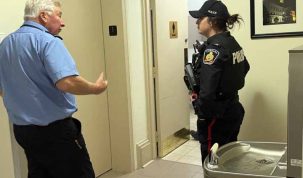
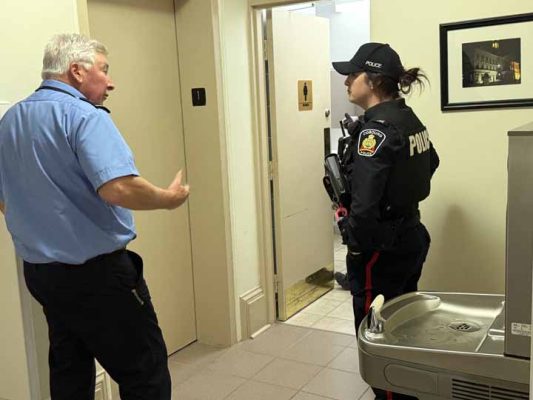
On Saturday, November 21, during a brief visit to Victoria Hall, that reality was once again on full display.
Within seconds, it became apparent that a woman inside the women’s washroom was unresponsive.
Security personnel did everything they could to get a response. They banged on the bathroom stall, raised their voices and repeatedly tried to determine whether the woman was all right.
There was no answer.
It was time to call 9-1-1.
The security guard immediately requested emergency assistance.
When emergency services receive a call involving someone who is unresponsive or potentially showing no vital signs, it can trigger a full emergency response from paramedics, firefighters and police.
Lights and sirens.
The possibility is that someone could be dead. Responders must get there as quickly as possible while still travelling safely.
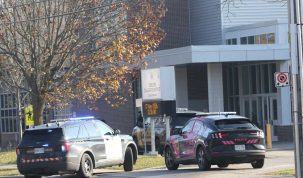
Police are commonly the first to arrive, as was the case on Saturday.
Paramedics then arrived from the west with emergency lights and sirens, while firefighters approached from the east.
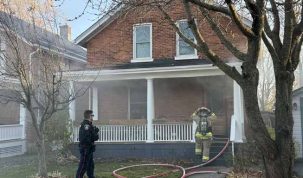
Firefighters entered Victoria Hall carrying tools in case they needed to force open the bathroom stall.
Thankfully, that wasn’t necessary.
Once again, the woman regained consciousness.
She declined medical treatment and simply walked away.
And there you have it.
An incident that prompted a full emergency response involving police, paramedics and firefighters ended with the individual walking away.
Is that right? Is that wrong?
You decide.
But what about the resources committed to that response? What about the emergency personnel who dropped whatever they were doing and rushed to Victoria Hall? What about the calls they might otherwise have been responding to?
A 9-1-1 call reporting a VSA is likely the highest priority call emergency services (paramedics) would have.
And what about the emotional toll of repeatedly attending incidents where someone could be dead, only to find themselves facing another situation that has become increasingly familiar?
Emergency services exist to protect all of us.
It doesn’t matter how much money we have in our bank accounts, what neighbourhood we live in or what clothes we’re wearing.
Everyone deserves help.
But there also needs to be recognition of the enormous strain this situation places on the people who are expected to respond, time after time.
We cannot simply accept this as the new normal.
People struggling with addiction need access to help. Those who are ready to accept that help need to be able to get it without having to navigate an endless maze of services.
At the same time, residents, businesses and emergency responders should not be expected to carry the consequences of a system that isn’t adequately addressing the problem.
There are no easy answers. But pretending the problem isn’t there certainly isn’t one.
And perhaps that’s the most difficult part for someone who has lived in Cobourg for generations.
This is our community.
We know its streets, its neighbourhoods and its people. We remember what it was like, and we see what it has become.
When Fentanyl became a common word, emergency services were never the same.
Neither was Cobourg.

Author: Pete Fisher
Has been a photojournalist for over 30-years and have been honoured to win numerous awards for photography and writing over the years. Best selling author for the book Highway of Heroes - True Patriot Love