



Northumberland County’s history has a new home — and it is a whole lot bigger, brighter and more welcoming.
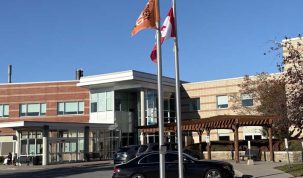
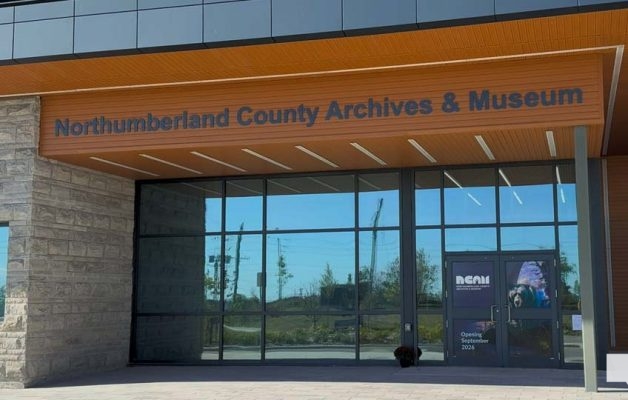
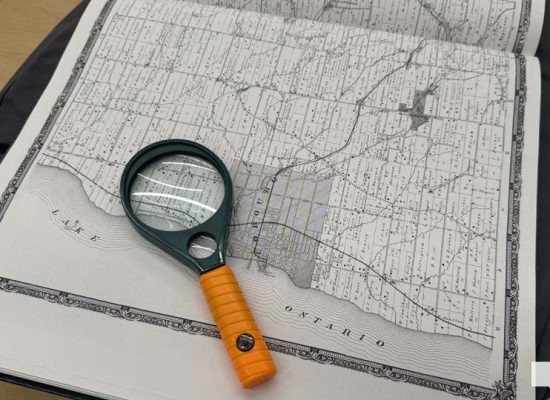
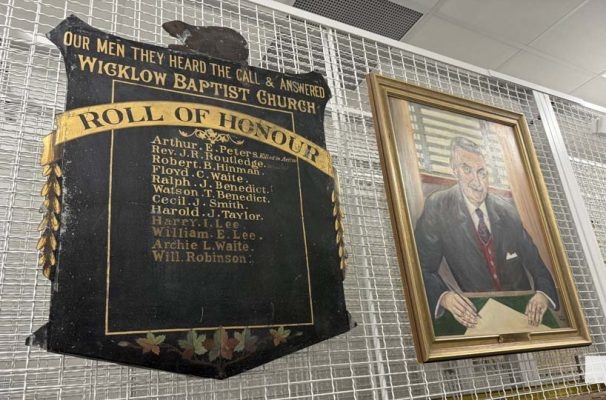
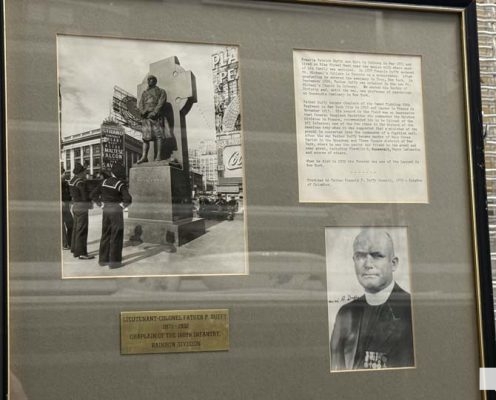
Located at 590 Courthouse Road in Cobourg, the new Northumberland County Archives and Museum is opening its doors to the public, bringing together archives, artifacts, exhibits, research space and programming under one roof.
For Curator Katie Kennedy, the new 6,000-square-foot facility represents years of planning and an enormous expansion from the Archives’ former location at 200 Ontario Street.
“This has been several years in the making,” Kennedy said.
The opportunity came when the County was constructing the new Golden Plough Lodge long-term care home.
“We were really excited when the county gave us permission to explore adding on a small little corner of this fabulous new long-term care home for a dedicated archives and museum space,” Kennedy said.
When the County took over management of the Archives in 2012, its mandate expanded beyond Cobourg to represent all seven municipalities in Northumberland County.
The result was a growing collection — and a shortage of space.
The former facility, located at the Cobourg Public Library, was approximately 1,200 square feet.
The new facility is five times larger at approximately 6,000 square feet.
Kennedy says the difference is immediately noticeable.
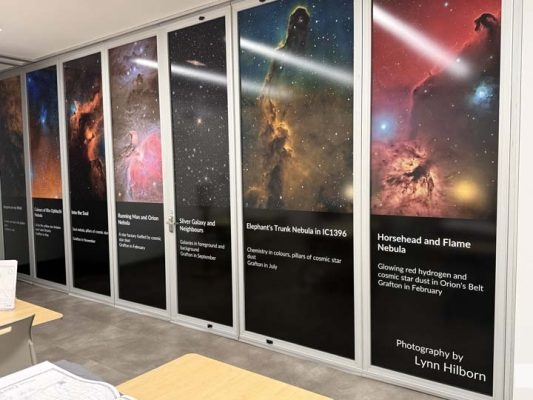
“The biggest change for us is that we have a dedicated gallery space where we can hold programming and exhibits,” she said.
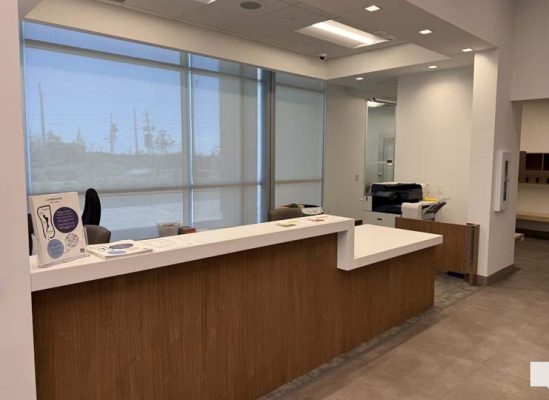
The new facility also includes its own washrooms, a coat room, accessible spaces and a reading room that is about four times larger than the previous research area.
That means more room for researchers, more public programming and more opportunities to showcase Northumberland’s history.
But Kennedy says there was another important consideration in designing the facility.
The Archives and Museum is part of the same building as Golden Plough Lodge, meaning residents of the long-term care home will be neighbours of the museum.
“Our goal was just to make it welcoming and bright for everyone,” Kennedy said.
“We’re also very mindful that we are a part of the same building as the Golden Plough Lodge. The residents, this is their home or their neighbour.”
She said the design was created with accessibility and the community’s most vulnerable residents in mind.
A Welcome to Turtle Island
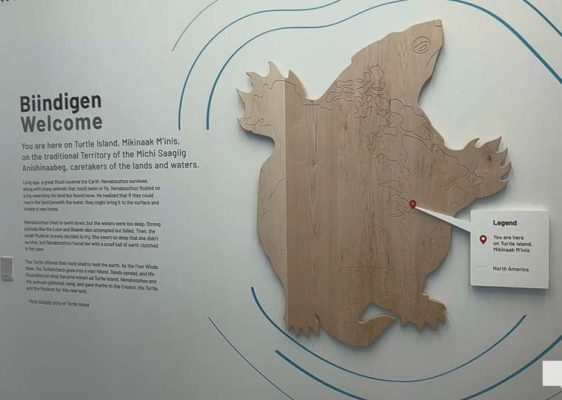
Visitors entering the museum are greeted with the word “Bindigan,” meaning welcome in Michi Saagiig.
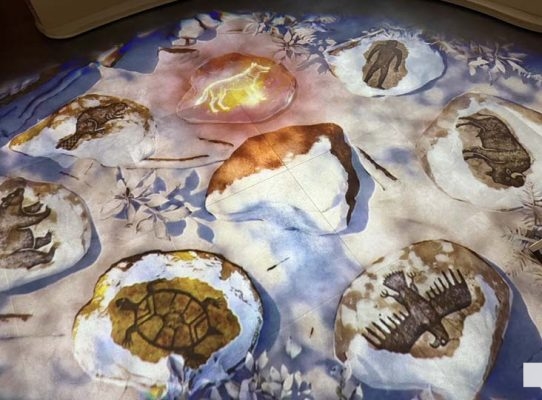
A large interactive map of Turtle Island introduces visitors to the Indigenous understanding of the land and includes the creation story explaining why many Indigenous communities refer to North America as Turtle Island.
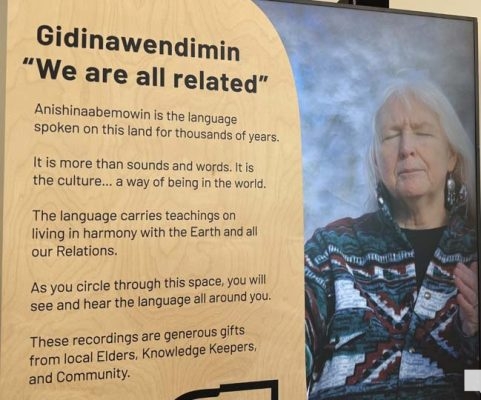
From there, visitors encounter the museum’s first exhibit, Gadino Wendamin, meaning We Are All Related.
Kennedy says the exhibit was developed through consultation and guidance from seven Indigenous Elders and Knowledge Keepers from across the region, including Alderville First Nation, Hiawatha First Nation and Curve Lake First Nation.
The work began in 2019.
“We first met with them in 2019 to explore what Michi Saagiig means to them, what their language means to them,” Kennedy said.
What emerged was an understanding that the language is much more than words.
“It is their culture. It is their connection to spirituality, to the Creator, to the land, to the beings, and to the Seven Grandfather Teachings,” Kennedy said.
The result is a digital, immersive exhibit with no traditional written panels.
Instead, the language surrounds visitors.
Kennedy described the exhibit as the result of years of listening and learning.
“The result of this exhibit is directly from spending seven years listening and learning what this group, what the language means to this group and to the community.”
A Window Into the Past
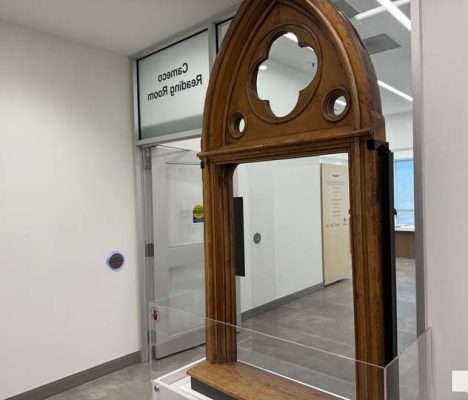
The new reading room contains a familiar piece of Cobourg history.
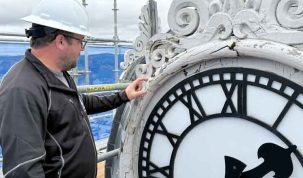
A window frame from Faraday Hall, salvaged by the Cobourg District Historical Society, has been incorporated into the entrance to the reading room.
At the previous Archives, the window frame hung behind the main desk.
Now, Kennedy says, it has effectively become a window again.
“It was always hanging on the wall behind the main desk at our old reading room,” she said.
The display also recognizes the work of the Cobourg District Historical Society in helping establish the important collection.
“It’s also their logo,” Kennedy said. “So we’re really proud to have it on display to thank them.”
The reading room includes a projector and can also be configured for workshops and presentations.
Its primary purpose, however, will be helping members of the public research Northumberland’s history.
Kennedy already had approximately eight research appointments booked as the facility opened.
“That’s where we bring the items out and help people guide them through the records and the artifacts so that they can unearth those historical details that they’re looking for,” she said.
Keeping History Safe
Perhaps one of the biggest changes is a part of the museum most visitors will never see.
The collections hall has specialized security and environmental controls designed for the long-term preservation of records.
For Kennedy, that represents a major improvement.
“This is finally a space where we know that Cobourg and all seven municipalities’ heritage is safe,” she said.
At the former facility, preserving the collection was a constant concern.
“In the 10 years that I worked there, we had several floods,” Kennedy said. “There was no environmental controls.”
Humidity during the summer was another problem.
“Every summer when it gets that humidity going, you’re just in a panic, worried about the records.”
The new facility is environmentally controlled, providing a much more stable environment for the County’s historical records and artifacts.
It also provides significantly more shelving and storage capacity.
And the collections reach deep into Northumberland’s past.
Kennedy said one Masonic Lodge collection from Brighton includes a first charter dating to 1817, while some municipal records date back into the late 1700s.
Open to the Public
The Northumberland County Archives and Museum is now open to the public Wednesdays from 10 a.m. to 4 p.m., Thursdays from 1 p.m. to 8 p.m., Fridays from 10 a.m. to 4 p.m., and the first Saturday of every month from 10 a.m. to 2 p.m.
The first Saturday of each month will include special children’s programming.
Tuesdays are reserved for student field trips.
And there is already strong demand.
Kennedy said the facility was booked with field trips through mid-November, with different groups scheduled in both the morning and afternoon.
For Kennedy, opening day brings excitement — and a few nerves.
“This is our first day that we’re really open to the public,” she said.
“I’m just excited for the public to come in and enjoy this and I can’t wait for what’s next to come.”
And what comes next could be just as important as what is already inside.
Kennedy says she wants to build future exhibits with community partners and create programming that is different from anything else being offered in Northumberland.
“We really admire and respect all the historical societies, the museums, the art galleries, the libraries, everyone that is in arts and culture in Northumberland,” she said.
The museum even has a television screen in its vestibule that will be used to promote programs and activities offered by other cultural organizations across the county.
“We want to shine a light on what they do,” Kennedy said.
For a county with a history stretching back centuries, the new facility provides something it has never had before: the space to preserve that history, research it, share it — and invite the public inside to experience it.

Author: Pete Fisher
Has been a photojournalist for over 30-years and have been honoured to win numerous awards for photography and writing over the years. Best selling author for the book Highway of Heroes - True Patriot Love