

By Cecilia Nasmith/Today’s Northumberland
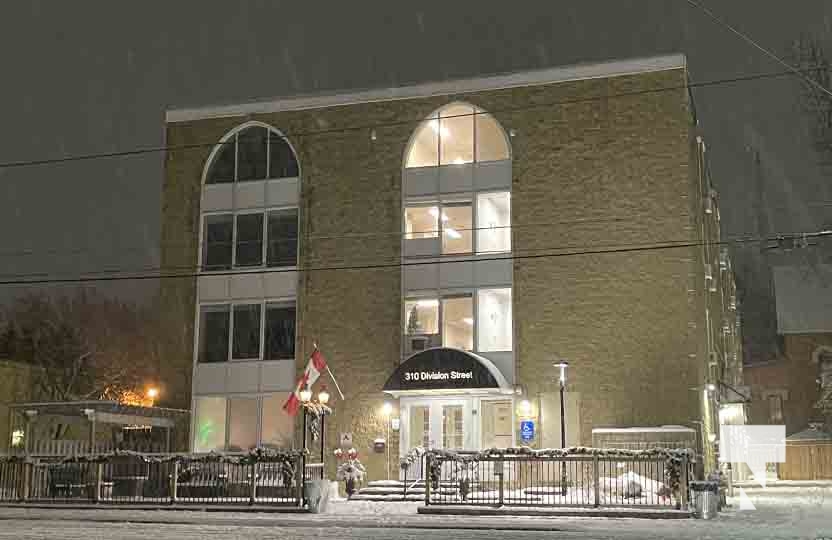
Originally envisioned as a one-year project to establish positive communications between the county homeless shelter at 310 Division St., Cobourg, and its immediate community, the Community Liaison Committee reaches the one-year mark with much more work to do.
Committee co-chairs Beth Bellaire and Chloe Craig addressed Northumberland County council’s Social Services Committee Wednesday to share their plans in the year ahead, as the shelter shifts to a higher-barrier model and the warming room has been relocated off-site.
Bellaire listed the action items they have undertaken and those they plan for the year ahead to foster positive relationships between community members and those staying in these facilities.
The list includes ensuring questions are directed to the appropriate authorities as well as education-and-awareness initiatives like the new monthly newsletter that is sent to everyone within a 500-metre radius of the shelter (as well as to such facilities as the library and local churches).
They are on the county website, where they post minutes of their meetings and provide an e-mail address to take questions. There is also a new Facebook site.
They have undertaken public speaking dates, addressing several Rotary clubs and church groups, with several more engagements lined up.
Together with the Northumberland Community Legal Centre and the affordable-housing committee, they have developed a banner and lawn signs identifying some of the struggles people have in finding housing. These will soon be deployed beyond Cobourg and throughout the county.
They have also developed an activity called A Day in the Life to help participants understand better what it’s like to live unhoused and to face one’s day without shelter. Bellaire said the committee hopes to take this “on the road.”
Throughout it all, she added, they will be listening to the voices of the people in the shelter “so we can amplify their voices back to the community.”
Associate Director of Housing and Homelessness Rebecca Snelgrove’s report said that the committee involves only about five hours of staff time per month through such things as attending meetings and “small administrative supports.”
As for budget requirements, the primary cost for the committee consists of providing light meals – about $3,000 annually.