

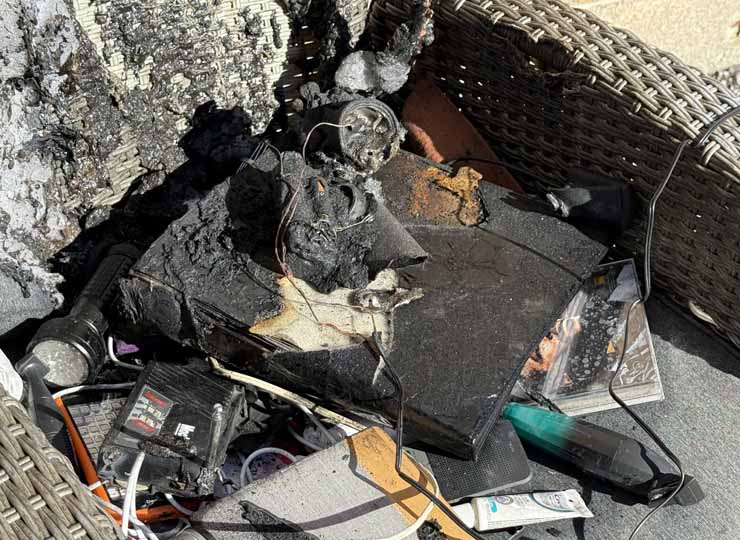
A lithium-ion battery left charging while nobody was home sparked a fire Tuesday (October 6, 2026) morning inside a multi-unit retirement residence on Peter Street, sending one worker to hospital and forcing residents from their homes.
Port Hope Fire and Emergency Services responded to 164 Peter Street at approximately 11:53 a.m. after receiving reports of a structure fire.
Chief Fire Prevention Officer Kris Gillis said the first crews arriving at the multi-unit retirement residence quickly confirmed a working fire on the third floor.
Firefighters launched an immediate internal attack while the building’s sprinkler system worked to contain the blaze.
“The sprinkler system did an excellent job keeping the fire in check,” Gillis said.
The sprinkler system helped keep the fire confined to the unit where it originated, allowing firefighters to enter the building and extinguish the fire.
But the incident also served as another stark warning about the growing danger posed by lithium-ion batteries.
Battery Left Charging
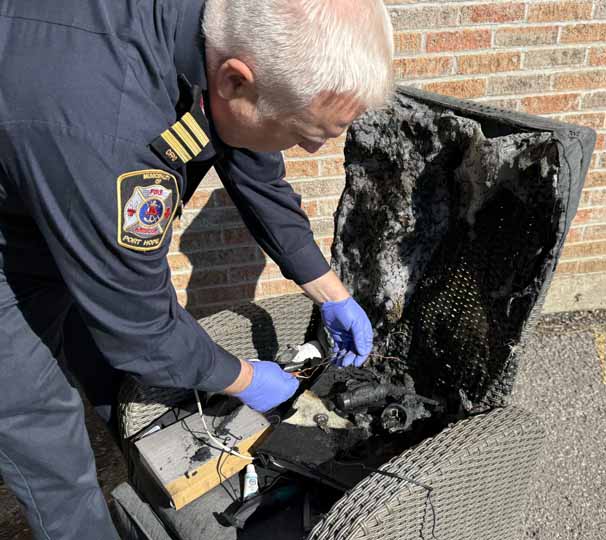
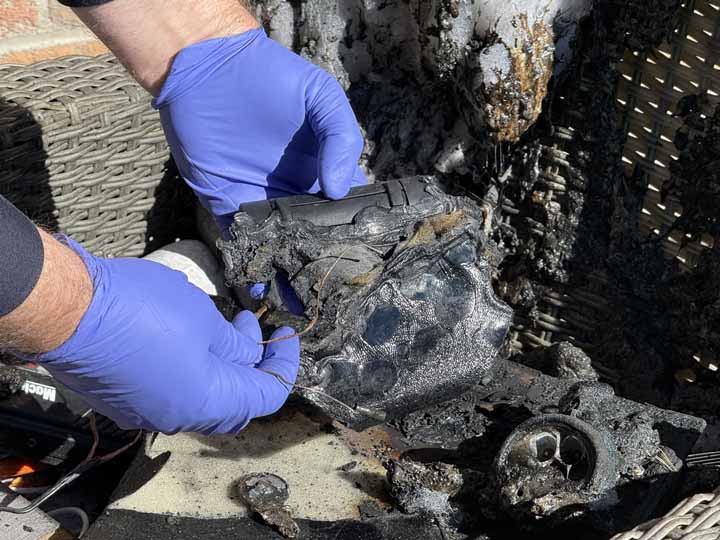
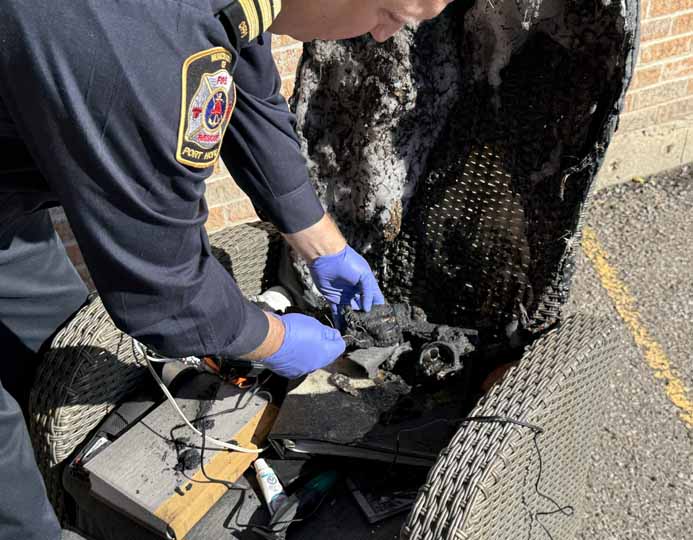
Gillis said preliminary findings indicate the fire began when a lithium-ion battery was left charging on top of a chair.
Combustible and flammable materials were also on the chair.
Investigators believe the battery overheated, igniting the chair and surrounding materials.
And there was nobody home when the fire started.
“The occupant was not home at the time,” Gillis said. “It appears that they left the items charging while they went off to do their things throughout the day.”
The battery fire could have had far more serious consequences if the building had not been protected by a sprinkler system.
Six United Affected
The fire did not result in any reported resident injuries, but one worker was transported to hospital after suffering minor smoke inhalation.
Gillis said he was later told the worker was doing okay.
Approximately six units were affected by the incident.
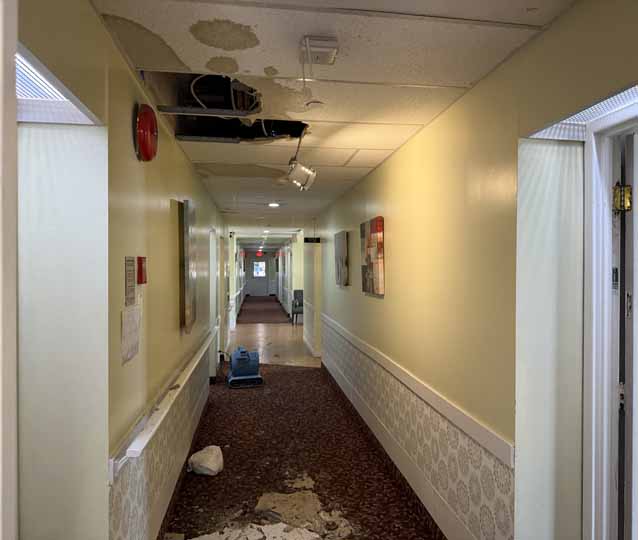
Three units were significantly impacted by smoke and water damage and were not habitable when firefighters left the scene.
Another three units were being assessed and crews hoped residents would be able to return later in the evening.
The sprinkler system itself helped prevent the fire from spreading, but also resulted in water damage to approximately three units.
The Hidden Danger of Fire
Gillis stressed that the damage caused by a fire involving a lithium-ion battery goes well beyond what can be seen on the surface.
A single chair may not appear to be a major fire load — until it catches fire.
Modern furniture, couches, comforters and other household materials can burn rapidly and produce enormous amounts of toxic smoke.
“The nature of the materials that are in our everyday chairs, comforters, couches is very flammable and does produce large amounts of toxic smoke,” Gillis said.
Lithium-ion batteries can also produce toxic smoke and carbon monoxide when they fail.
And that smoke can become deadly long before flames reach an occupant.
Fire Chief’s Warning
Lithium-ion batteries are now part of everyday life.
They are found in cell phones, shavers, battery packs, power tools and countless other household products.
Gillis said the batteries themselves are not going away — meaning people need to learn how to use and charge them safely.
His message is straightforward:
Don’t leave lithium-ion batteries charging while you are away from home.
Don’t overcharge them.
Use the correct charger.
Charge them on a cool, flat surface where air can circulate around them.
And never charge them on or beside combustible materials such as furniture, bedding, clothing or other items that can quickly catch fire.
Gillis also warned that aging batteries can become an increasing concern, particularly when they have been damaged or are being charged with the wrong equipment.
“Always follow the manufacturer’s instructions,” he said.
A Fire That Could Have Been Much Worse
Tuesday’s fire is another reminder that something as routine as plugging in a battery can turn into a life-threatening emergency.
In this case, a battery left charging on a chair was enough to ignite the surrounding material.
The difference between a contained fire and a catastrophic one may have been the building’s sprinkler system — and the fact that the fire was discovered and attacked before it could spread.
Gillis said the warning should be taken seriously.
Charge lithium-ion batteries properly. Charge them on a safe surface. And most importantly, don’t leave them charging when nobody is home.
As of October 6, 2026, Toronto Fire Department has responded to 108 lithium battery fires.

Author: Pete Fisher
Has been a photojournalist for over 30-years and have been honoured to win numerous awards for photography and writing over the years. Best selling author for the book Highway of Heroes - True Patriot Love