Video – Photo Gallery – Volunteers Carry On Decades-Long Fish Lift Tradition in Cobourg
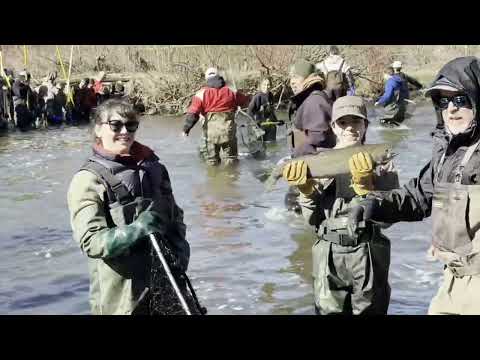
A unique conservation tradition nearly six decades in the making continues to bring the community together in Cobourg.
On Saturday, April 11, 2026, 48 volunteers gathered along Cobourg Creek at Elgin and Ontario streets to take part in the annual fish lift at Pratt’s Pond — now the site of The Mill Restaurant and Pub.
The long-running event helps trout bypass the dam by manually lifting them upstream, improving their chances of survival and strengthening the local population.
More than 200 trout were successfully moved during this year’s effort.
The tradition dates back nearly 60 years, with early organizers including the father of Christine Jubenville-Clarke. Today, she continues to play a role in keeping the event alive — and ensuring the next generation steps up.
“It’s great to see the generations of volunteers take part each year,” said Jubenville-Clarke. “The generation that is currently doing it is getting older and we need other generations to take on the responsibility of helping these species.”
That generational handoff was evident, with the youngest volunteer just seven years old.
The process begins by guiding trout into a holding area along the creek, where a temporary barrier is installed. From there, younger volunteers are often first to net the fish, placing them into baskets.
Officials from the Ontario Ministry of Natural Resources and Forestry then assess each fish — determining sex and checking for lamprey marks — before they are carefully transported over the dam and released upstream.
The move is critical for survival.
“Once they’re up above the dam, you don’t have the bottom feeders, the herons, the other birds that live off of them,” said Jubenville-Clarke. “It gives them a better chance of making the population bigger and stronger.”
The event continues to draw support from beyond Cobourg, with volunteers travelling from communities including Bobcaygeon, Whitby, Ajax and Mississauga.
With participants ranging in age from seven to 70, organizers say the success of the fish lift — and its future — depends entirely on volunteers.
“We’ve been doing this for over 60 years,” said Jubenville-Clarke. “Without volunteers we wouldn’t be successful.”


Author: Pete Fisher
Has been a photojournalist for over 30-years and have been honoured to win numerous awards for photography and writing over the years. Best selling author for the book Highway of Heroes - True Patriot Love